Tempered Glass Breaking
Good sound insulation effect:
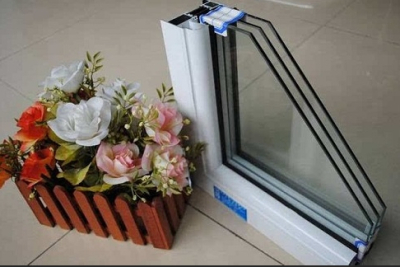
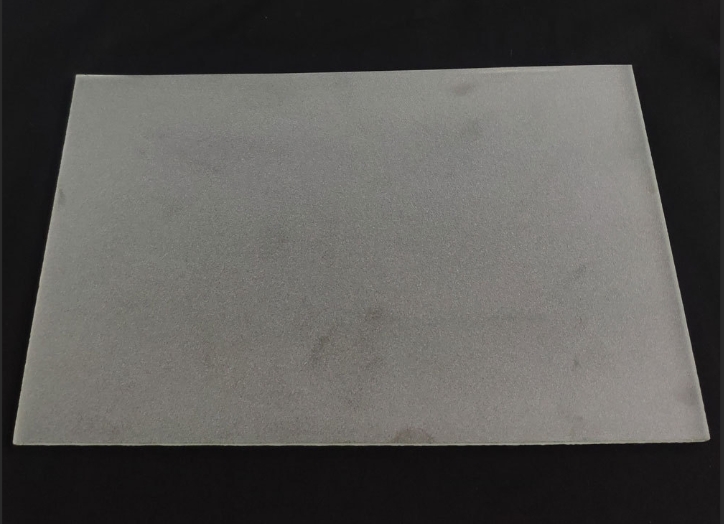
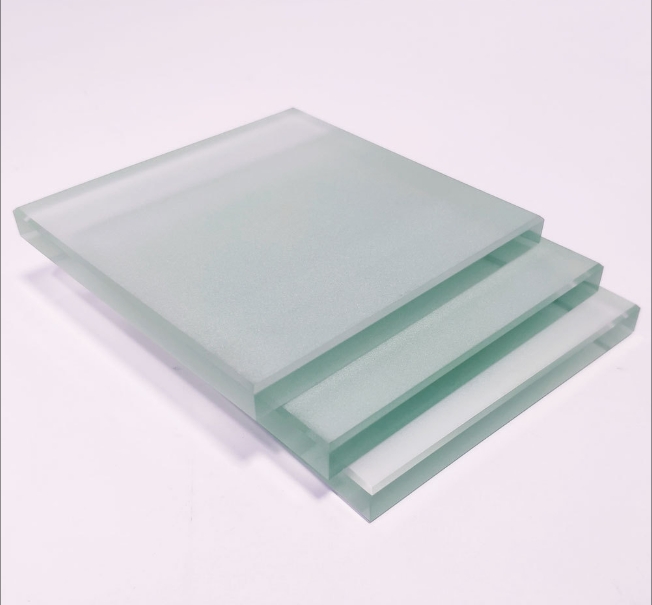
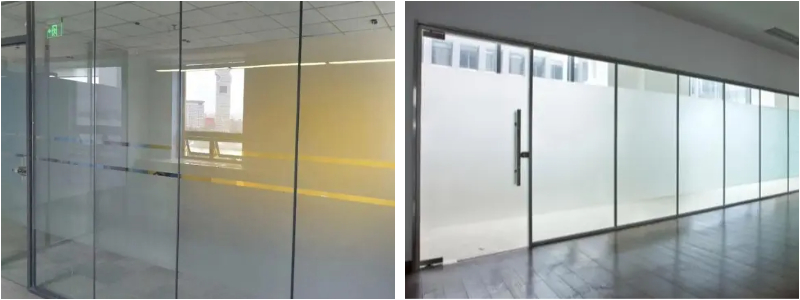
When making sound-insulating glass, you can use frosted glass, due to the fact frosted glass has a very suitable impact in sound insulation. If you use frosted glass to make sound-insulating glass, the sound-insulating glass produced will have a very correct effect. When producing sound-insulating glass , frosted glass is regularly used to produce sound-insulating glass
Product Details
(A) Product Overview & Introduction
Tempered glass breakage characteristics refer to the unique and controlled failure mode of tempered safety glass, which is engineered to crumble into small, relatively blunt granular pieces instead of sharp, jagged shards when subjected to catastrophic force. This fundamental safety property is the result of a controlled thermal tempering process, where the glass is rapidly cooled from over 600°C, creating a state of high surface compression and internal tension. When the surface compression layer is compromised beyond its limits—by a severe impact on the edge, a flaw like a nickel sulfide inclusion, or thermal shock—the stored energy is released, causing the entire pane to disintegrate into a network of small, cube-like fragments. This granular breakage pattern, often termed “dicing,” is the cornerstone of its classification as a safety glazing material, as it significantly reduces the potential for lacerations and serious injuries. At Shandong Ulan Glass, we rigorously test and certify our tempered glass to ensure its breakage pattern consistently meets the stringent fragmentation requirements of international standards like EN 12150 and ANSI Z97.1, providing architects, builders, and end-users with a predictable and safe failure mode.
(B) Core Product Features & Safety Mechanisms
- Predictable Granular Fragmentation: Upon breakage, our tempered glass fractures into thousands of small, typically cubical pieces, each with dulled edges. The average particle size and weight are controlled to be within safe limits, preventing the formation of large, dangerous shards that are common with annealed glass.
- Enhanced Impact Resistance: The tempering process makes the glass surface 3-5 times stronger than standard annealed glass, allowing it to withstand greater blunt force impacts, wind loads, and thermal stress before reaching its breaking point, thereby reducing the likelihood of breakage in the first place.
- Contained Breakage Pattern: Unlike annealed glass which can collapse in large, falling sheets, the interconnected granular pieces of broken tempered glass tend to remain loosely held together within the frame, reducing the risk of falling debris and providing a barrier until replacement.
- Thermal Stability & Breakage Pattern: The high surface compression also grants superior thermal shock resistance. In the rare event of thermal breakage, the pattern remains granular. We conduct heat soak testing (according to EN 14179) on critical applications to minimize the risk of spontaneous breakage from nickel sulfide inclusions.
- Post-Breakage Stability for Laminated Safety Glass: When tempered glass is used as a ply in laminated glass, its granular fragmentation upon impact helps the PVB interlayer hold the broken pane in place, maintaining the glazing’s integrity as a barrier against fall-through or forced entry.
(C) Technical Specifications & Fragmentation Standards (In Table Format - MUST NOT be an image)
Parameter | Specification & Test Standard | Details & Compliance |
|---|---|---|
Fragmentation Test | EN 12150-1, ANSI Z97.1, GB 15763.2 | The number of fragments in a 50mm x 50mm area is counted. Must meet minimum counts (e.g., >40 pieces for 4mm thick glass). |
Fragment Count (Typical) | 4mm Thick: > 40 pieces / 50x50mm area 6mm Thick: > 30 pieces / 50x50mm area 10mm Thick: > 15 pieces / 50x50mm area | Thicker glass yields fewer, larger permissible fragments. We ensure all production batches exceed these minimums. |
Fragment Size & Weight | Average Particle Weight ≤ Specified Limit | Ensures no single fragment is heavy or sharp enough to cause serious injury. |
Impact Safety Performance | Drop Ball Test (EN 12600) Classifications | Tested for impact resistance and breakage safety, classified for use in buildings (e.g., door sidelights, partitions). |
Thermal Stress Resistance | ΔT ≥ 150°C | Can withstand a rapid temperature differential far exceeding that of annealed glass. |
Surface Compression | ≥ 90 MPa (Typically 100-150 MPa) | Measured with a surface stress meter. High compression is the source of strength and safe breakage. |
Common Thickness & Max Sizes | 3mm, 4mm, 5mm, 6mm, 8mm, 10mm, 12mm, 15mm, 19mm Max Size: Up to 3300mm x 6000mm | Available in clear, ultra-clear, tinted, and with various coatings. Thickness influences fragment size. |
Certifications | CE Marking, SGCC (US), China Compulsory Certification (CCC) for applicable products | Independent third-party testing reports are available. |
(D) Detailed Applications & Critical Safety Considerations
- Safety Glazing in Buildings (Mandatory by Code): This is the primary reason for using tempered glass. Applications include:
- All-glass Doors & Sidelites: Any door or window within 18 inches of a door must be tempered to prevent severe injury from accidental impact.
- Shower & Bath Enclosures: To prevent injury from slips and falls, all glass in wet areas must be tempered or laminated.
- Glass Railings & Balustrades: The entire infill panel and any structural glass members in railings are tempered for fall protection.
- Skylights & Overhead Glazing: Tempered or laminated glass is required to protect occupants below in case of breakage.
- Automotive Side & Rear Windows: Automotive tempered glass is designed to break into the characteristic small granules, allowing occupants to push through for escape while minimizing cutting injuries in a crash.
- Furniture & Appliance Glass: Used in table tops, shelf panels, and fireplace screens, where breakage could pose a direct contact hazard.
- Post-Breakage Analysis: Understanding the breakage pattern (origin point, stress marks, fragment size) is crucial for forensic analysis to determine the cause of failure (impact, thermal stress, edge damage, inclusion). We provide technical support for such analyses.
(E) Our Manufacturing & Quality Control Process
At Shandong Ulan Glass, the safe breakage characteristic is engineered into the glass from the start. The process begins with meticulously inspected, high-quality float glass, cut to size with edges seamed and polished to remove micro-cracks that could initiate failure. The glass is then heated uniformly to over 620°C in a state-of-the-art horizontal tempering furnace, before being rapidly quenched with high-pressure air jets. This quenching process locks in the surface compression. Every production batch undergoes mandatory fragmentation sampling. A test piece from the furnace is broken in a controlled environment, and the fragments within a 50mm x 50mm square are counted to ensure compliance with the standard. This rigorous in-process control, combined with final product inspection, guarantees that every sheet of “Ulan” tempered glass will perform safely if broken.
(F) Packaging, Handling & Warning Labels
Tempered glass cannot be cut or drilled after processing. All handling instructions are clearly marked on the protective film or crate. Each piece is separated by protective interleaving, wrapped in a tough, weather-resistant plastic film, and packed in a sturdy, A-frame wooden crate to prevent edge damage during transit, as edge damage is the most common cause of in-service breakage. We affix the standard safety glazing mark (SGMark) or equivalent certification mark, which includes the manufacturer’s name, the standard complied with (e.g., EN 12150), and the glass type. This traceability is part of our commitment to safety and quality.
Leave your messages