Tempered Glass New
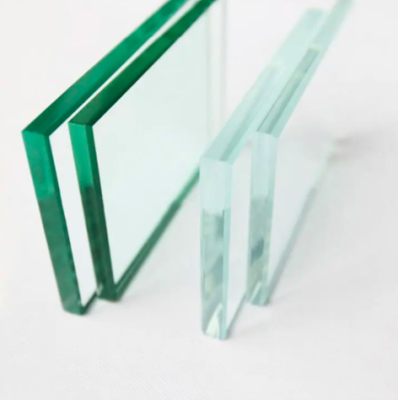
Superior Strength: Premium tempered glass boasts 3-5 times higher hardness than standard glass, with great pressure and impact resistance for stable daily use.
Safe Explosion-proof Performance: Shatters into blunt tiny particles without sharp edges, preventing scratch and injury risks for safer installation and usage.
High Clarity & Light Transmittance: Ultra-clear glass surface with low visual distortion, ensuring high light transmission and neat decorative effect.
Excellent Wear Resistance: Hardened polished surface resists daily scratches and abrasion, keeping long-lasting flawless and brand-new look.
Strong Thermal Stability: Tolerates extreme hot and cold temperature changes, effectively avoiding cracking in diverse indoor and outdoor scenarios.
- Anisotropy-Free (Low-Distortion) Tempered Glass: Utilizing proprietary furnace technology and advanced quenching systems, we minimize the “quench marks” or strain patterns that are visible under polarized light in standard tempered glass. This is critical for applications requiring perfect optical clarity, such as museum display cases, high-end retail storefronts, scientific equipment, and areas with strong polarized light sources (e.g., LED video walls behind glass).
- Chemically Tempered Glass (Ion-Exchange): This process involves submerging the glass in a molten salt bath, causing larger sodium ions in the glass to be replaced by smaller potassium ions from the salt, creating a deep layer of surface compression. The result is glass that is:
- Thinner & Stronger: Can be 5-8 times stronger than thermally tempered glass of the same thickness, enabling ultra-slim designs for smartphones, tablets, and wearables.
- Superior Surface Quality: No thermal roller waves, making it ideal for precision optical applications.
- Post-Tempering Machinability: Can be cut after chemical strengthening, offering more design flexibility for prototypes and complex shapes.
- PDLC Film: Switchable privacy glass (opaque to clear with electricity).
- Transparent Conductive Layers: For touch interfaces and transparent heaters.
- Integrated LED/OLED Panels: Creating see-through displays for retail or control panels.
Parameter / Glass Type | Standard Thermally Tempered | Anisotropy-Free Tempered | Chemically Tempered | Ultra-Clear Tempered |
|---|---|---|---|---|
Primary Strengthening Method | Thermal (Air Quench) | Advanced Thermal (Precision Quench) | Chemical (Ion Exchange) | Thermal |
Typical Thickness Range | 3mm - 19mm | 4mm - 12mm | 0.5mm - 3mm | 3mm - 19mm |
Surface Compression | ≥ 90 MPa | ≥ 90 MPa | ≥ 500 MPa | ≥ 90 MPa |
Key Advantage | Cost-effective safety, large format | Excellent optical clarity, no quench marks | High strength in thin profiles, cuttable | Highest light transmission, neutral color |
Optical Distortion | May exhibit slight anisotropy | Minimized to near-zero | Extremely low | Same as standard, but clearer base |
Light Transmission (4mm) | ~ 84% | ~ 84% | ~ 84% (on std. base) | > 91% |
Post-Tempering Workability | Cannot be cut, drilled, or edged | Cannot be cut, drilled, or edged | Can be cut and edged after strengthening | Cannot be cut, drilled, or edged |
Main Applications | Windows, doors, shower enclosures, furniture | Display cases, high-end facades, polarized light environments | Smartphone covers, watch glass, thin instrument panels | Display cases, solar, aquariums, designer glazing |
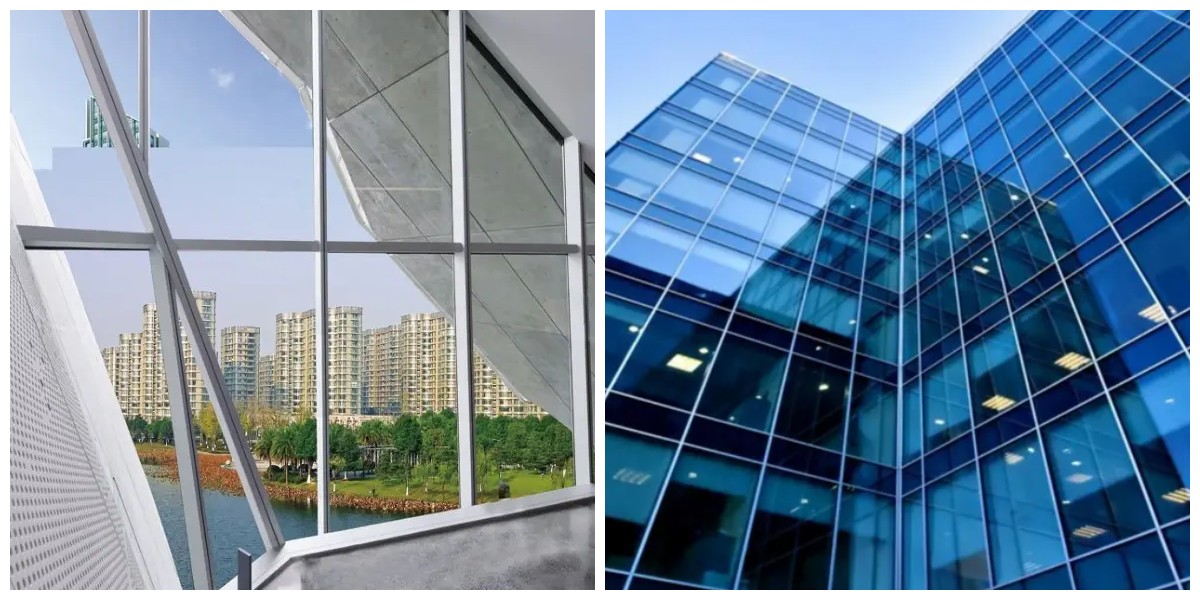
- Architecture & Interior Design: Anisotropy-free glass is revolutionizing luxury storefronts and gallery displays. Ultra-clear tempered glass is used in frameless glass balustrades and partitions for a “floating” effect. Smart glass is used in conference rooms and luxury residences for on-demand privacy.
- Consumer Electronics & Displays: Chemically tempered glass (like Gorilla Glass) is the industry standard for mobile device screens. Its strength allows for thinner, lighter, and more durable devices.
- Automotive & Transportation: Advanced tempered glass is used for larger, more complex-shaped panoramic roofs, thinner but stronger side windows for weight reduction, and laminated smart glass for sunroofs with adjustable transparency.
- Specialized Industrial: Chemical tempering is used for thin glass substrates in sensors and medical devices. Ultra-clear tempered glass is used as cover glass for high-efficiency solar panels.
- PDLC (Polymer Dispersed Liquid Crystal) Film: Allows the glass to switch from clear to opaque for privacy.
- Transparent Conductive Films: Enable touch-sensitive controls.
- Integrated LEDs or OLEDs: Turn the glass into a transparent display.The tempered glass provides the necessary durable, safe substrate for these advanced technologies.